←Back to My Work
Global translations workflow
Company: Schneider Electric
Role: Senior Product Designer
Duration: 3 months
Team: Product, engineering, design, asset management
Platform: Mobile app
Service Design
Design Ops
Workflow design
Localisation
Problem Statement
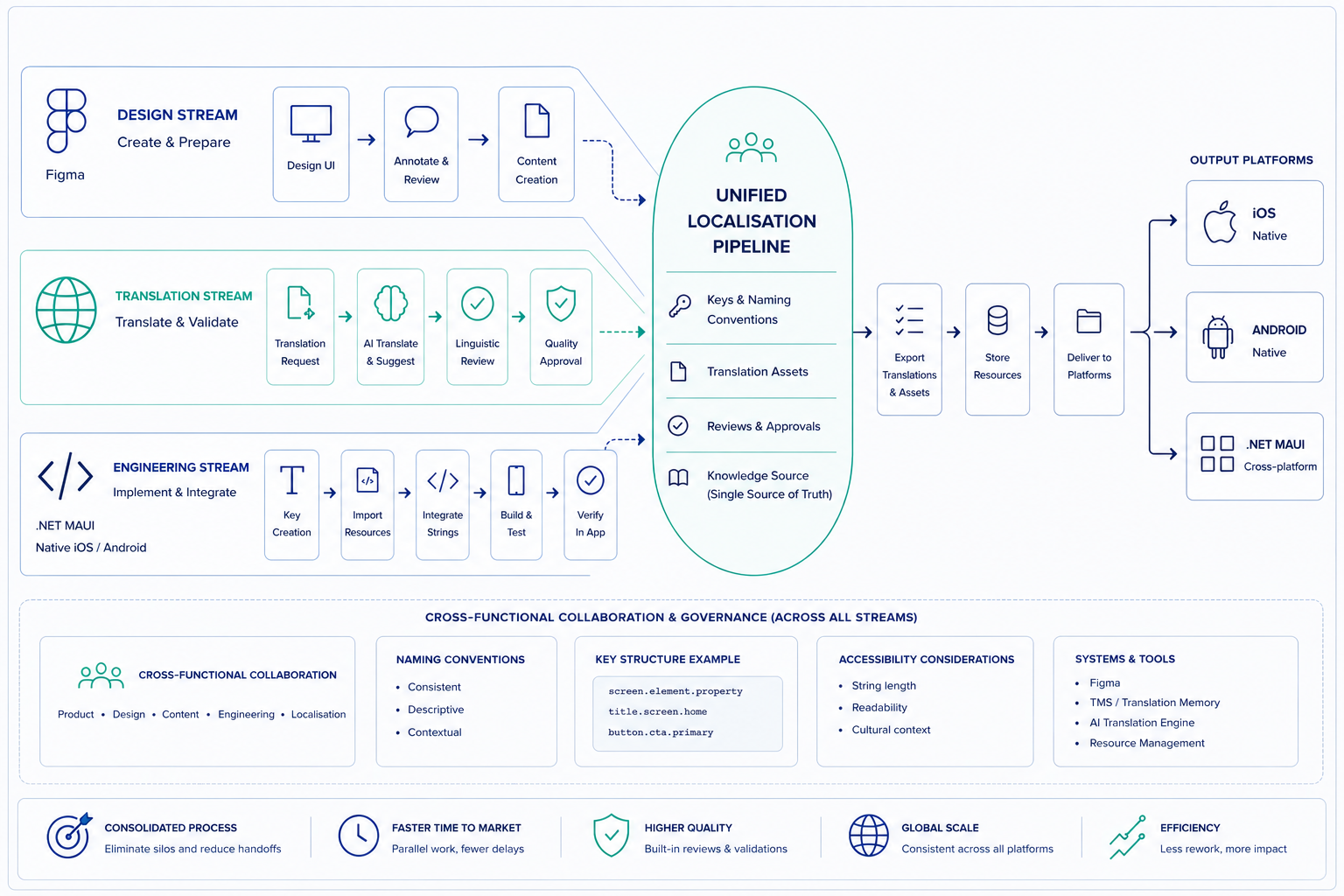
We were finding that the translation process was extremely slow and we were constantly chasing translators for content before we could build the final result. I took it upon myself to take the opportunity when two new apps were being created to create a workflow to simplify the process, make the process more efficient, and reduce the overall effort for everybody involved.
Constraints and Context
The engineering team had been maintaining and creating all of the keys since the initial app was built. I wanted to change that process so that the design team owned the key creation and the tools we were using were global link strings and Figma with the global link strings plugin. We were building for two different platforms: native iOS and Android and .NET MAUI.
My Role
I was the lead designer for the project and I worked with product engineering, asset management, the wider design team, and engineering to map the existing process and identify the bottlenecks. I proposed and implemented a solution to reduce the overall time, increase the efficiency, and also reduce language bugs post-launch.
Approach
The approach was to map the existing process, identify bottlenecks, and work with stakeholders to reduce the overall effort on the translators who were not translators as their first primary role but in-country product managers. Translations were taking more and more of their time so we wanted to move to a more efficient process to use a dedicated translation agency.
I identified the different languages that were being used for the code and therefore the key structures that would be put in place and the technology being used. For example i18n was being used for the native applications whereas no specific tool library was being used for .NET Maui. We instead used a single ResX file.
I created a flow diagram outlining the existing process, highlighted the areas, discussed with stakeholders, and proposed a few different solutions and put that into practise.
Key Decisions
Designers creating keys
Having the designers create the keys brings this process to the forefront and allows consistency to be built in from the beginning. This is a critical part of the process to maintain a decent set of standards.
Removing in-country managers from the process
This was the key bottleneck to development and we were constantly chasing translators when we wanted to build and ship the application. It also reduced their workload, which was something they had been raising for a long time that was not part of their scope.
Using an unapproved translation agency
For the two new projects they were time-critical and as we already had a content writer from this agency, we felt it was best placed for the launch to use this agency. However, Schneider had a pre-approved list of translators that could use the GlobalLink tool, which would allow the purchase order process to be built into the translations ordering. By not using one of these vendors had to bill the translation orders separately, which was a small extra overhead but we fully intend to either approve this agency or switch to another agency post-launch to simplify the process even further.
Solution
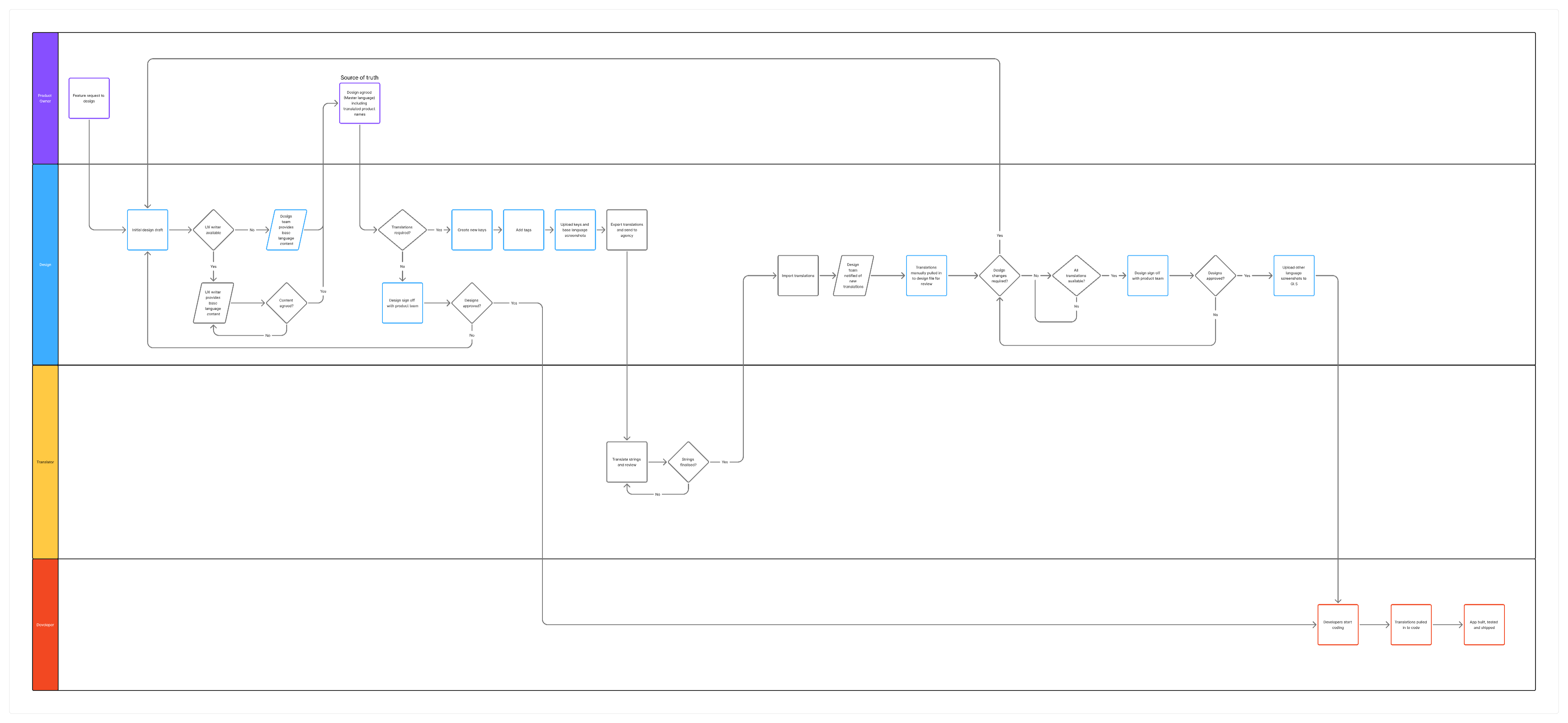
The overall solution was a more efficient process that introduced a translation agency, reduced the effort on development to create keys and move that to the design team where it naturally belongs, removed all effort from in-country managers for translation creation and review, instead using AI machine translation generated content with a human review process.
Outcome and Impact
Although I did not see this project through to production, I saw it all the way through to the point where the engineering team were consuming keys created by the designers. The translations had been already sent and returned and integrated into the application for an internal review to assess the process.
What I Would Do Differently?
With hindsight I would have liked to update the key naming for the existing project and add all of the keys into Figma so as to be able to use the keys for updating content and creating screenshots in different languages. I would also like to have worked with the design lab to see if we could integrate this process for all Schneider Electric apps rather than the area I was working on for Wiser Home and the new project that was replacing it. That said I believe the outlined process would have worked for other applications but would have been a much larger undertaking across a vast array of different applications created by different teams.