←Back to My Work
Evolving an Existing Product for New Capabilities
Company: Schneider Electric
Role: Lead UX/UI Designer
Duration: 18 months
Team: Product, engineering and design
Platform: Mobile app
product strategy
UX Design
Design Systems
Information Architecture
Problem Statement
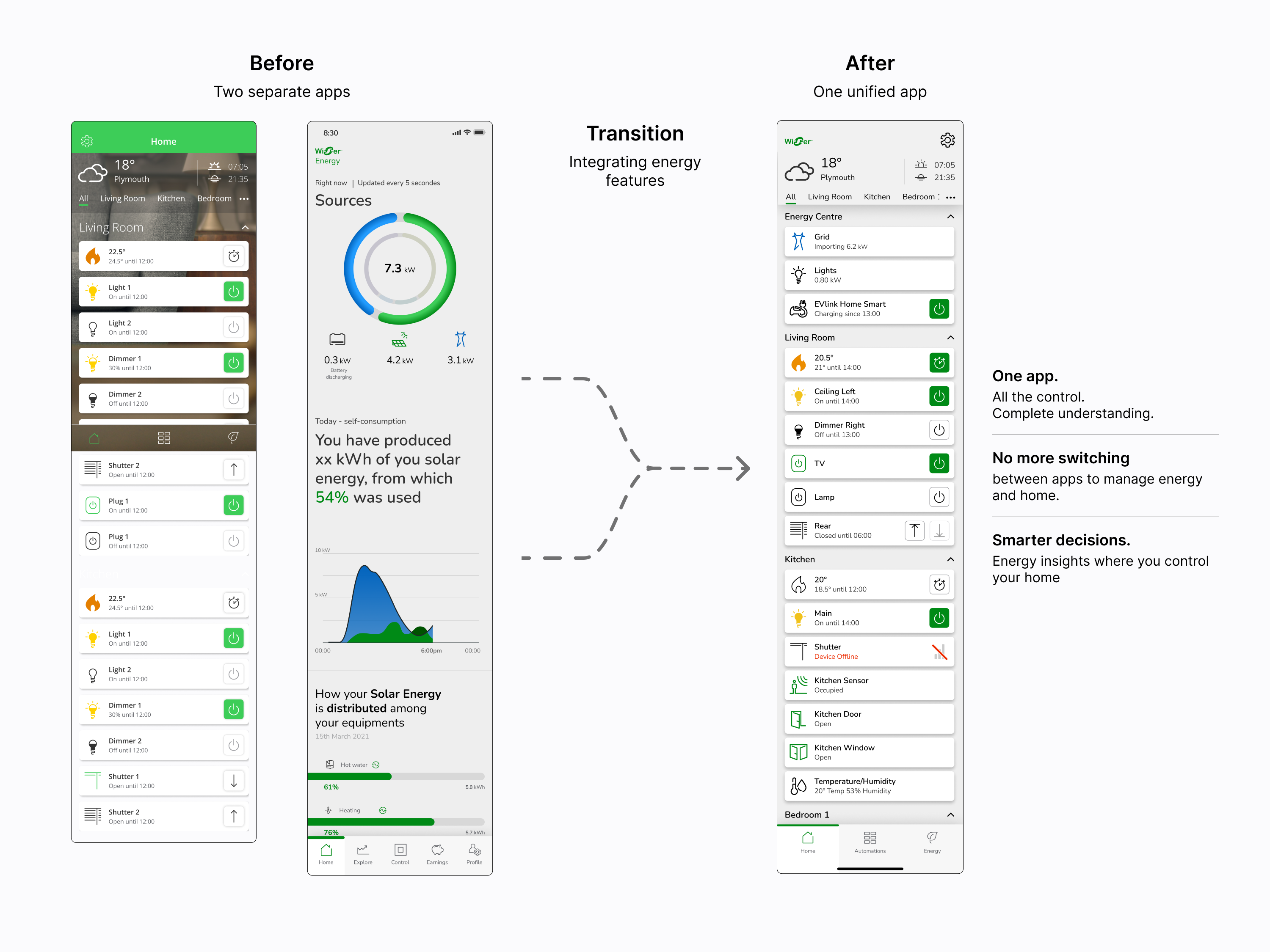
As part of a wider shift away from specialist apps toward a single, generalist platform, the business set out to consolidate the Wiser Energy app into the Wiser Home smart home app. The project involved integrating energy‑focused features alongside existing smart home functionality, while simultaneously rebuilding the app to support a new design system and a full visual and structural refresh.
Constraints and Context
The project began in September 2022, with a planned launch the following year. This provided a long‑term runway but also required sustained focus across multiple phases, including feature integration, design system changes, and delivery coordination.
My Role
I was the lead designer on the project, responsible for rebuilding the Wiser Home app using the updated design system before progressing with the integration of features from the secondary app. This involved reworking all existing screens to align with new components, layouts, and interaction patterns, establishing a consistent foundation ahead of feature migration.
I collaborated closely with product, engineering, and the wider design team throughout the project, ensuring design decisions aligned with technical constraints, delivery priorities, and the broader product strategy. This approach helped reduce fragmentation, support efficient integration, and maintain consistency as the app evolved.
Approach
The project began by aligning on the overarching goal of consolidating functionality from the Wiser Energy app into the Wiser Home app as part of the move toward a single, generalist platform. To support this, the first phase focused on rebuilding the existing Wiser Home app screens using the updated design system, establishing a consistent and scalable foundation before introducing additional features.
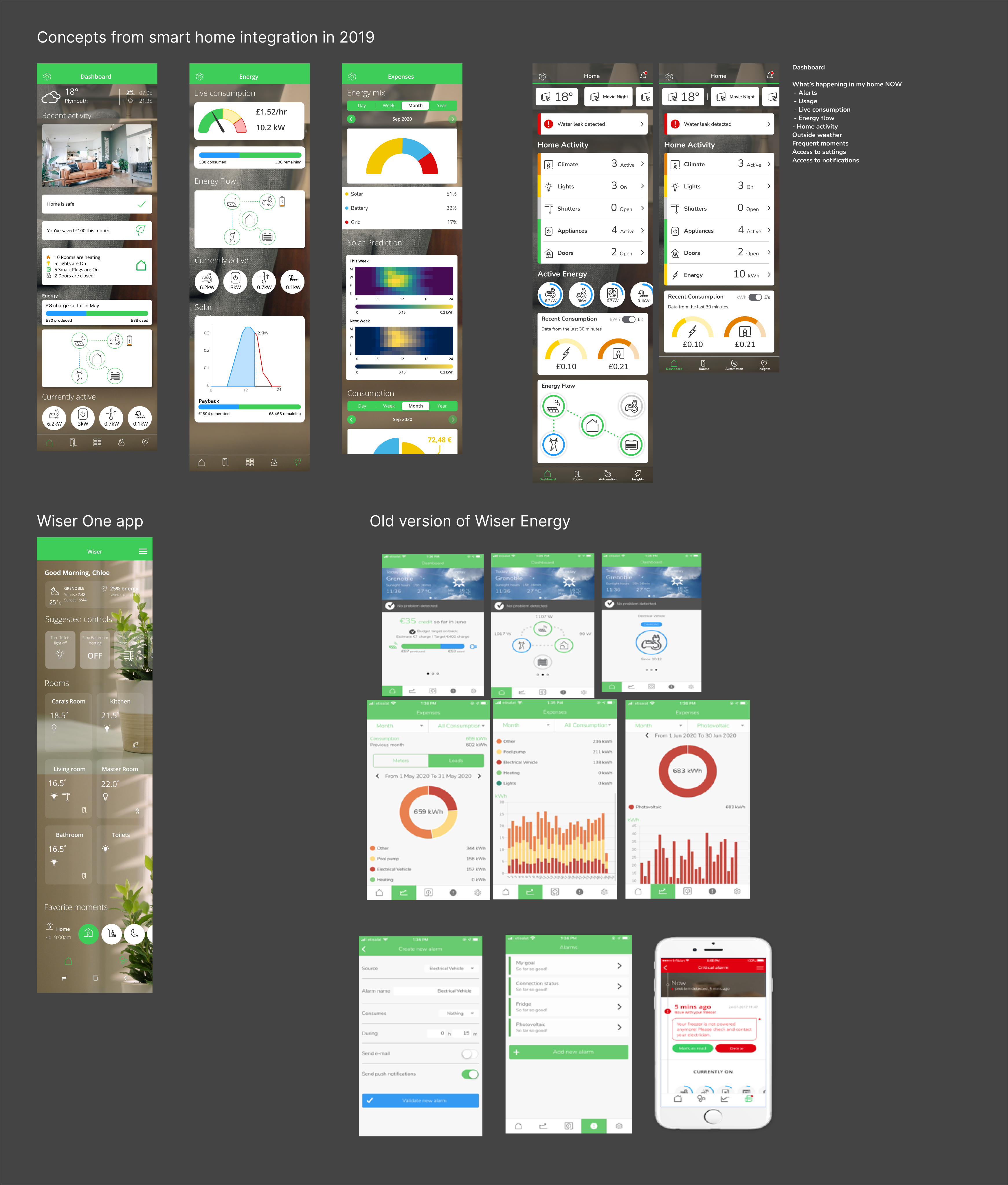
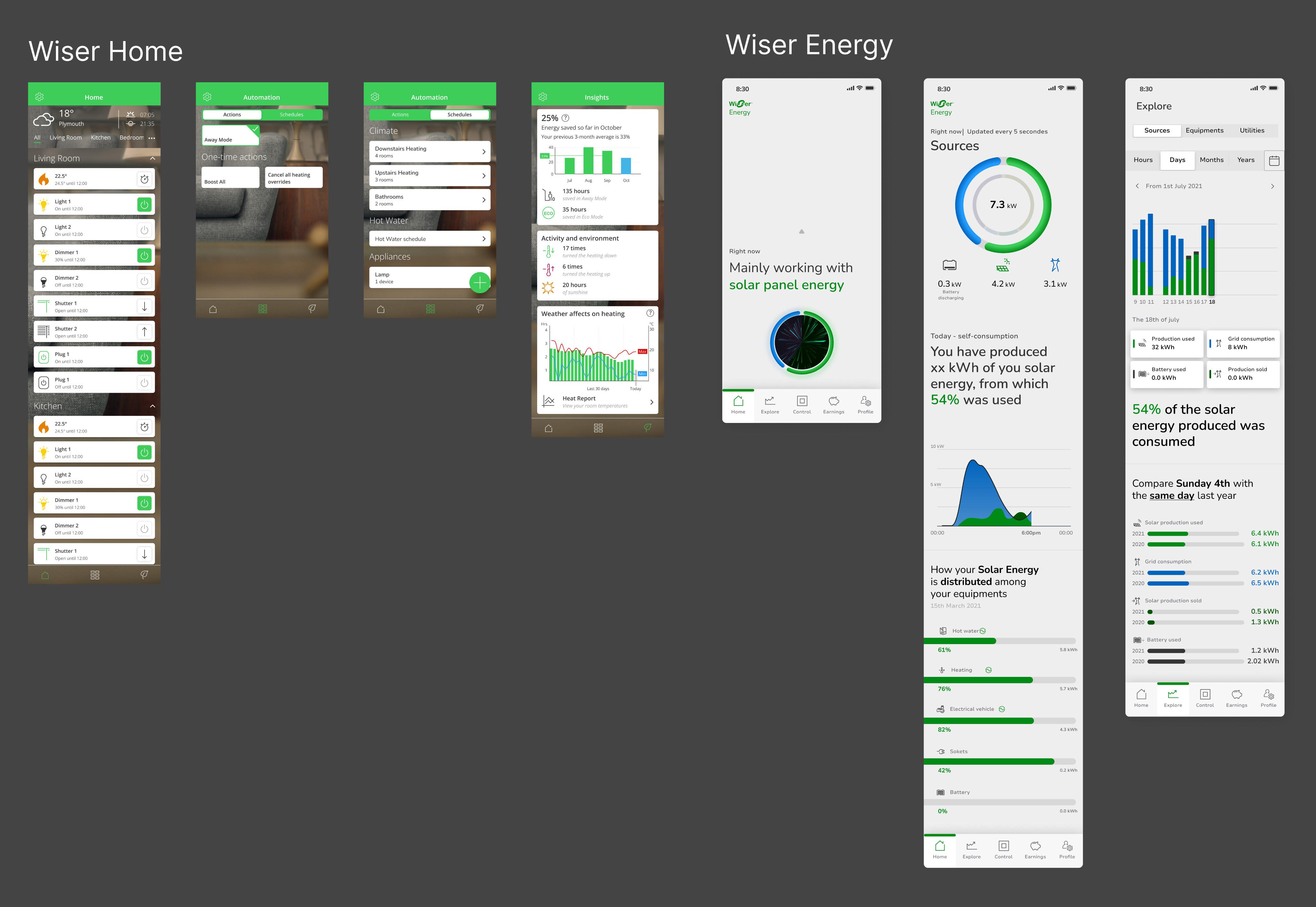
In parallel, key features from the secondary app were reviewed and mapped against existing functionality to identify overlaps, gaps, and opportunities for consolidation rather than duplication. This helped prioritise which capabilities should be integrated first and where existing patterns could be reused or extended.
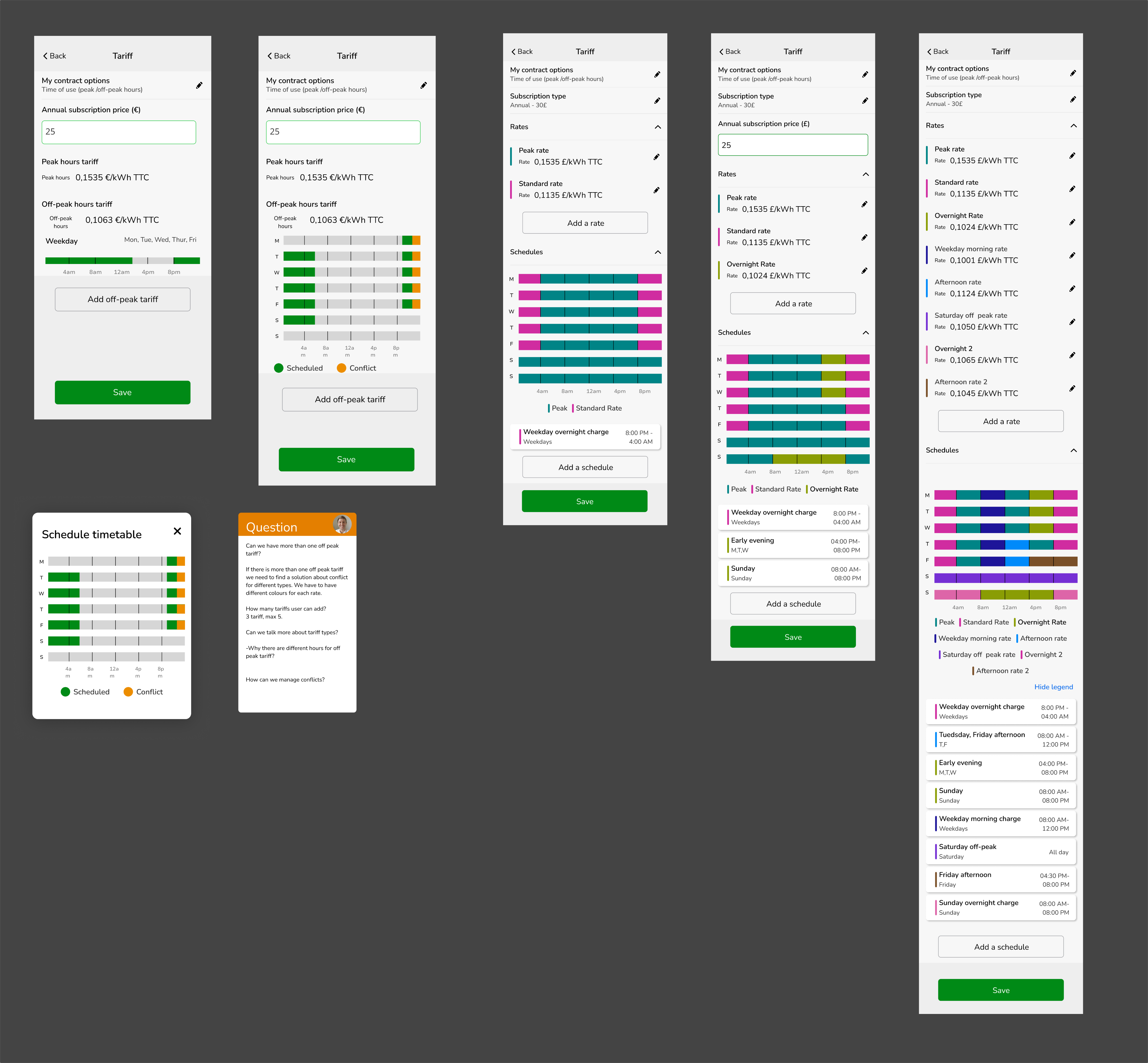
During this phase, more ambitious improvements to the energy experience were explored, including a redesigned tariff scheduling flow. Early concepts were used to assess potential user value and technical feasibility. However, given the complexity of implementing such changes alongside app consolidation and a full design system migration, this work was ultimately deferred to keep scope focused and delivery risk manageable.
The final approach balanced reuse, integration, and system alignment. By prioritising core journeys and validating new components through real product features, the integration work contributed directly to strengthening the design system while supporting the wider platform strategy.
The final approach balanced reuse, integration, and system alignment. By prioritising core journeys and validating new components through real product features, the integration work contributed directly to strengthening the design system while supporting the wider platform strategy.
Key Decisions
Deferring a full redesign of the tariff scheduling experience
A redesigned tariff scheduling flow was explored and validated through user testing, where it clearly outperformed the existing experience. On the basis of this evidence, I recommended progressing with the new solution.
Despite this, a more incremental approach was implemented due to prioritisation and delivery effort. As a result, several of the usability issues identified during testing were not addressed in the final solution, even though a stronger alternative had already been validated through user research.
Use integration work to validate and strengthen the design system
During this work, I advocated for adopting Schneider’s Quartz design system as the long‑term foundation, as it would have provided clearer ownership and a more sustainable system model. However, the engineering investment required meant a full transition was not prioritised.
The decision was therefore made to adapt the existing app design system to align as closely as possible with Quartz. While this improved visual consistency in the short term, it locked in higher long‑term maintenance effort that has repeatedly surfaced and constrained subsequent system evolution.
Solution
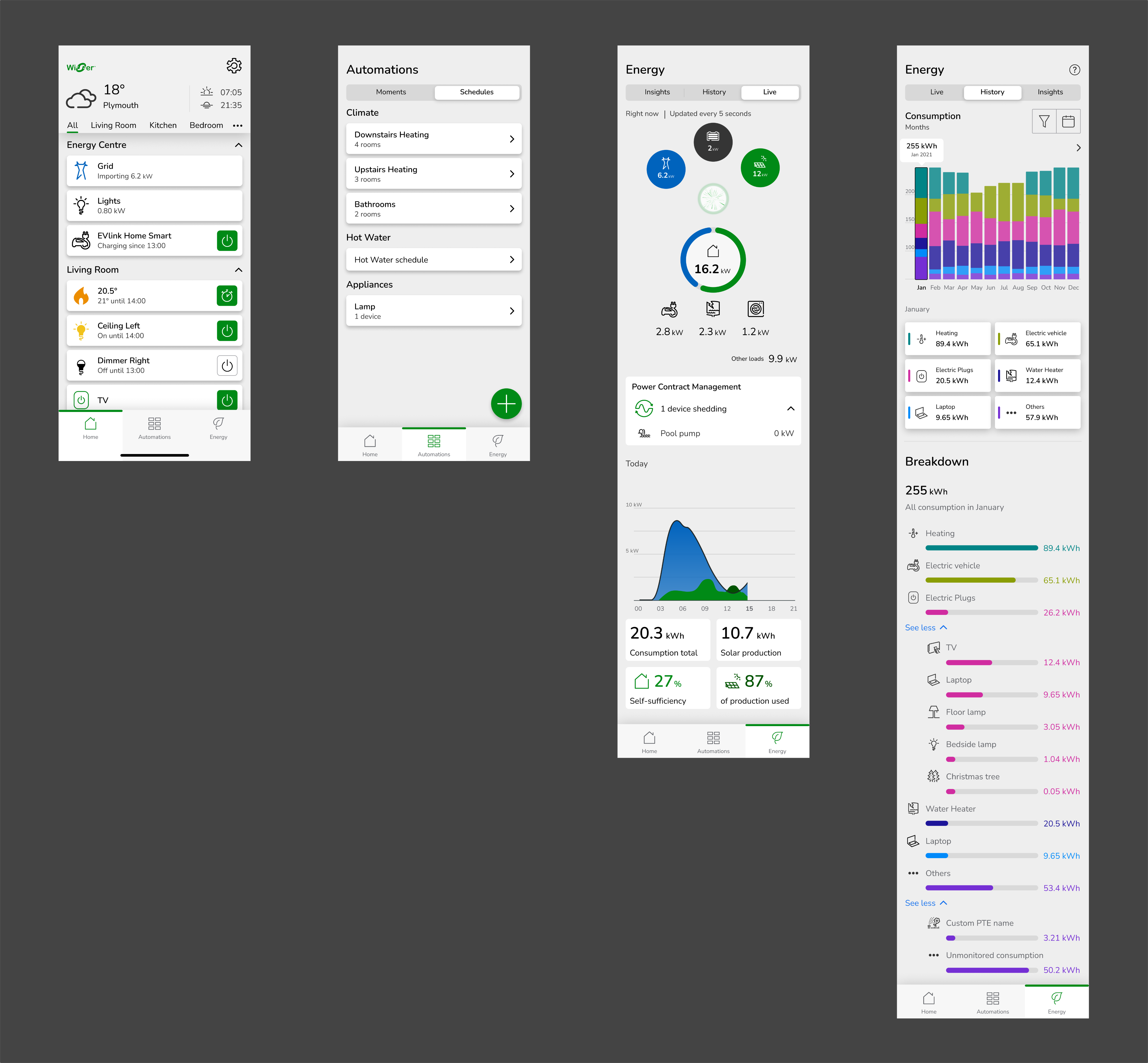
Since its initial launch in September 2017, the Wiser Home app had used background imagery as a core part of its visual identity, with several variations introduced over time. Moving to the new design system therefore represented a significant departure from the established styling of the application. As expected, this shift prompted a range of reactions internally and externally, reflecting how familiar users and stakeholders had become with the existing visual approach.
The updated style was not re‑tested with end users at this stage, as it had already been validated through Schneider Electric’s design lab. This allowed the team to focus delivery effort on rebuilding the app against the new system while working from an approved visual direction.
Overall, the new design system introduced a level of clarity and consistency across screens that had previously been difficult to maintain. It also elevated the perceived quality and professionalism of the app, aligning it more closely with the expectations customers associate with the Schneider Electric brand.
Outcome and Impact
The consolidation of the two apps successfully brought energy and smart home functionality together into a single Wiser Home experience, supporting the business shift away from specialist apps toward a unified platform.
Alongside the integration, the introduction of the new design system set the app on a clearer and more consistent visual foundation for future development. This visual language has remained in place since it’s launch, providing continuity as new features and capabilities have been added over time.
What I Would Do Differently?
With hindsight, I would have pushed harder for full design system compliance across the app. At the time, the wider project was still developing an understanding of the long‑term benefits of a robust design system, and the system itself had grown organically rather than through deliberate governance.
My own experience with design systems was also still evolving at that stage. With my current understanding, I would prioritise stricter alignment to system standards earlier, ensuring components, patterns, and behaviours could scale more reliably as the product continued to grow.